
New Jersey DUI Attorney Rachel Kugel Explains How Prosecutors Prove DUI Cases
Prosecutors in New Jersey face a demanding legal standard before securing a conviction for driving under the influence,
Press Release Disclaimer: This is a press release distributed through the XPR Media network. It has not been independently verified by our newsroom.
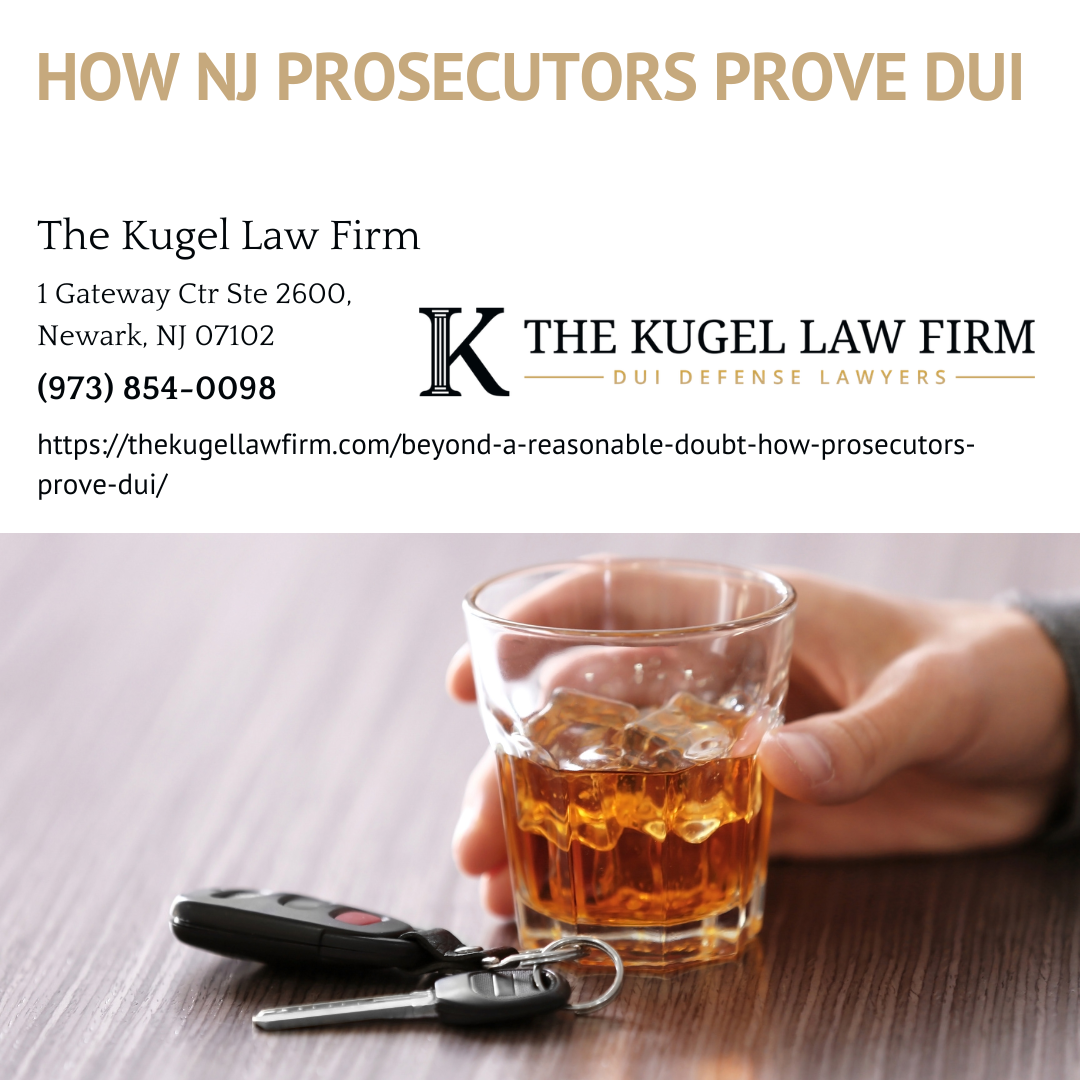

NEWARK, NJ – Prosecutors in New Jersey face a demanding legal standard before securing a conviction for driving under the influence, and that standard is not automatic. New Jersey DUI attorney Rachel Kugel of The Kugel Law Firm (https://thekugellawfirm.com/beyond-a-reasonable-doubt-how-prosecutors-prove-dui/) is offering guidance on the elements the state must establish and the evidence prosecutors typically rely on to prove impaired driving charges.
According to New Jersey DUI attorney Rachel Kugel, the state must prove beyond a reasonable doubt that a driver operated a motor vehicle while under the influence of alcohol or drugs, a standard far higher than the preponderance of the evidence test used in civil matters. Under N.J.S.A. 39:4-50, prosecutors must establish operation of the vehicle, that the offense occurred in a covered location, and that the driver was impaired. “Each of those elements is a potential point of defense,” explains Kugel. “If the state cannot prove one of them, the charge itself can be challenged.”
New Jersey DUI attorney Rachel Kugel notes that impairment can be proven two distinct ways under state law. A driver can be convicted through a chemical test showing a blood alcohol concentration at or above 0.08 percent, or through an observational case built primarily on the arresting officer’s testimony. New Jersey courts have found that a driver can be convicted through observational evidence with or without a specific chemical test result, meaning a missing or borderline breath sample does not guarantee the case will be dismissed. Because these two paths line up with different penalty tiers, the exact method the state relies on can affect what a driver ultimately faces.
Attorney Kugel adds that prosecutors typically combine several categories of evidence to meet their burden, including breath test results, standardized field sobriety test performance, the arresting officer’s observations, statements made during the stop, physical evidence recovered from the vehicle, and dashcam or bodycam footage. Each category carries potential weaknesses. Breath test results, for example, depend on proper calibration and a certified operator, and New Jersey courts have excluded results in cases where required procedures were not followed, including instances where devices were calibrated without a properly traceable thermometer.
The firm also points to the added challenges of drug-related DUI charges, where no breath test exists to establish a numeric result. “Because there is no equivalent to a BAC number for most drugs, these cases often rely on a Drug Recognition Expert’s opinion, and that opinion can be challenged through cross-examination,” notes Kugel. A first-time drug DUI conviction in New Jersey carries a mandatory license suspension of seven to twelve months, distinct from the escalating penalty tiers that apply to alcohol-related offenses, and unlike alcohol cases, no ignition interlock device is required because those devices only measure alcohol on a driver’s breath.
Refusing a chemical test does not eliminate the risk of a DUI conviction, either. Under New Jersey’s implied consent law, refusal is treated as a separate offense carrying its own penalties, and prosecutors may still proceed with a DUI charge using observational evidence. The firm represents clients across Newark, Jersey City, Hoboken, and the wider Hudson County area, where DUI stops are frequently reported along major roadways and local courts see a steady volume of impaired driving cases each year.
The Kugel Law Firm regularly reviews breath test calibration records, officer training documentation, and field sobriety test administration when building a defense. “Understanding exactly what the prosecution has to prove is the starting point for identifying where their case is vulnerable,” Kugel states. Attorney Kugel also notes that recent changes to New Jersey law now allow broader plea negotiations in DUI matters, giving defense attorneys additional room to pursue a reduced sentence or lesser offense when the underlying facts support it.
DUI cases in New Jersey are decided by a municipal court judge in a bench trial rather than a jury, but the reasonable doubt standard still applies to every element the state must prove. Because these cases are treated as traffic offenses under New Jersey law, some drivers assume the stakes are lower than they actually are, when in reality a conviction can still carry license consequences, mandatory surcharges, and an ignition interlock requirement that follows a driver for months or years.
For those facing a DUI charge in New Jersey, understanding the state’s burden of proof and the categories of evidence prosecutors rely on can help clarify what to expect moving forward. Contacting an experienced DUI defense attorney early in the process may help protect driving privileges and support a more informed defense strategy.
About The Kugel Law Firm:
The Kugel Law Firm is a Newark-based law firm focused on DUI and DWI defense for clients throughout New Jersey and New York. Led by attorney Rachel Kugel, the firm represents drivers throughout Newark, Jersey City, Hoboken, and Hudson County. For consultations, call (973) 854-0098.
Email: admin@thekugellawfirm.com
Media Contact

Name
The Kugel Law Firm
Contact name
Rachel Kugel
Contact phone
(973) 854-0098
Contact address
1 Gateway Ctr Ste 2600
City
Newark
State
NJ
Zip
07102
Country
United States
Url
https://thekugellawfirm.com/


